
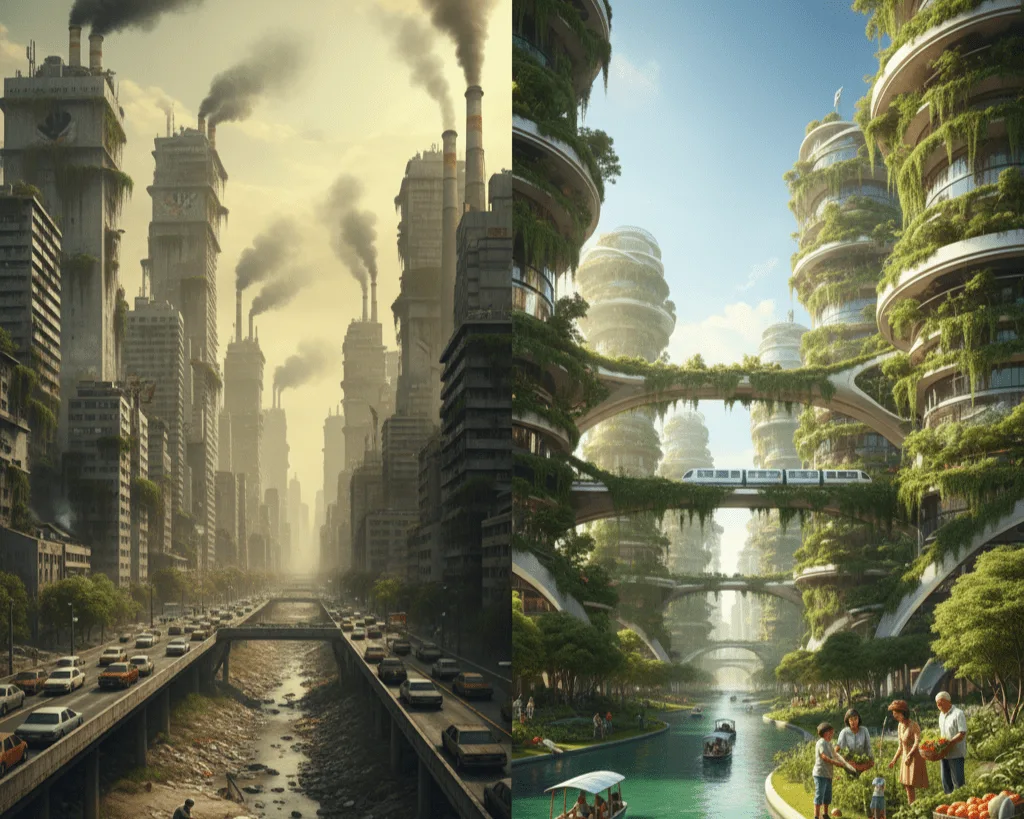
In the face of evident urban growth and the environmental crisis that is faced today, the theoretical framework is oriented towards a current perspective of important considerations for the intervention of built environments, as well as their effects on human beings. Starting from the user as the main entity, their biological and psychological needs in a place of stay, a theoretical framework is taken as a reference, based on collecting and reviewing information from relevant sources, to achieve the proposal of a design proposal, which provides practical solutions consistent with the identified factors.

Urban growth is increasing every year and results in a challenge to meet the needs of the inhabitants such as
housing, infrastructure, transportation and basic services.
John Wilmoth (2014), director of the population division of the UN Department of Economic and Social
Affairs, states: “Urban population growth will continue to be encouraged by two factors: people’s persistent
preference to move from rural to urban areas and population growth over the next 35 years.”
“These two factors combined will add 2.5 billion people to the urban population by 2050.” (2014)
Megacities with more than 10,000,000 inhabitants continue to increase, from 10 in 1990 to 28 in 2014.
For Latin America, this growth will mean 13%.
The cities of Mexico and Sao Paulo have 21,000,000 people respectively.
With these data, it is possible to see that for the vast majority of people, life takes place in artificial
environments, since more than half of the world’s population lives in cities.

Among the problems identified by this population growth are environmental aspects that can be threatening
to urban development. According to the World Bank, the Sourcebook for Environmental Assessment (1992)
identifies factors that must be considered in the planning and development of habitable environments.
The analysis of environmental factors, and the influence they have on human behavior, is essential for an effective design proposal.




A sober understanding of the environmental impact on human beings, and their impact on the environment, helps to be sensitive to biological environments, to propose and design responsible solutions. Internal design relates to the environment as spaces are designed, where people live and work. The environmental impact can be reduced in the selection of materials, furniture and energy sources, in the design of the spaces, and in all aspects of the development of the project.
The UN’s intergovernmental panel on climate change establishes that human activity has been a factor in climate change and 50% of this activity corresponds to the built environment. These factors are reflected in the construction methods and operation of buildings, since the emission of greenhouse gases has caused an increase in the planet’s temperature. (Dodsworth, 2009, p.144).
It is important to consider the origin of the materials and the methods of obtaining raw materials through unsustainable practices and the implications that this can cause on the environment.
Proposing to reduce the use of systems with high energy consumption, such as heating, cooling, cooking and lighting systems, contributes to minimizing the environmental impact.
“Energy conservation measures can have little impact on the aesthetics of
internal spaces” (Dodsworth, 2009, p.144)
“If we apply design and systems in buildings that allow
us to save energy and other resources such as water, we would be benefiting ourselves and the community.
This reduction in consumption also generates economic savings in service billing.” Aarón Morales,
Costa Rican Chamber of Construction. (2016)
“Sustainable buildings improve the well-being and productivity of the people who use them” Cristina Fallas Villalobos. La Nación Newspaper (2016)
“A green building increases the productivity of the occupants, as it has been designed thinking about the quality of the living spaces, the amount of natural lighting required, adequate acoustic levels, thermal control and others. All these aspects to improve the quality of life and health,” said José Ugalde, sales director of Schneider Electric.
“In a sustainable city, environmental risk should be minimized and its infrastructure maximized. At the same time, it should have an efficient public transport system that uses clean energy,” said Ileana Granados, from the Federated College of Engineers and Architects.
Sustainable image
Social: Generation of employment, decent housing, functional places, respect for spaces and territories.
Environmental: Materials used, use and efficiency of energy, location and impacts, use of climatic and soil conditions.
Economic: Service infrastructure, innovation in the quality of housing, training of professionals, accessibility.
Cristina Fallas Villalobos (2016)
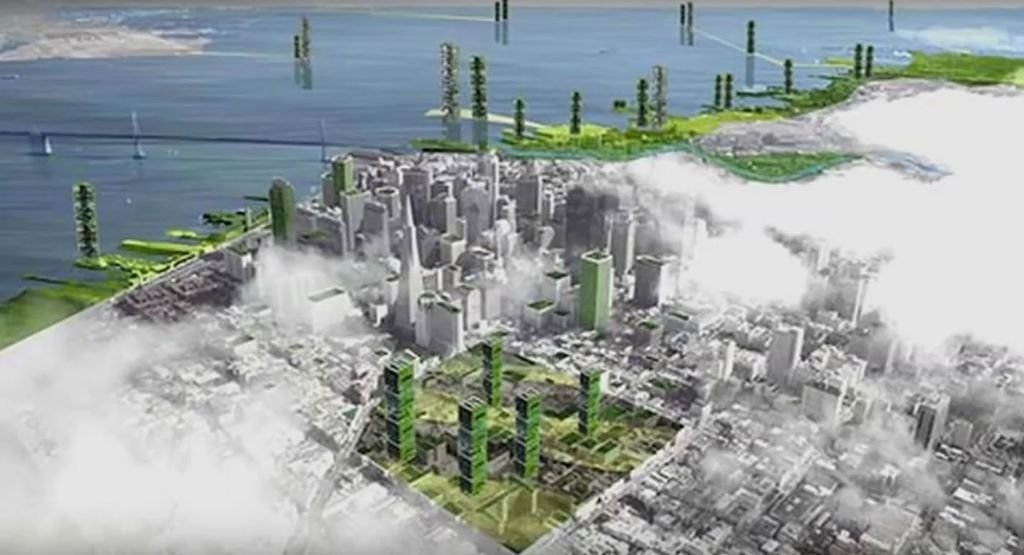
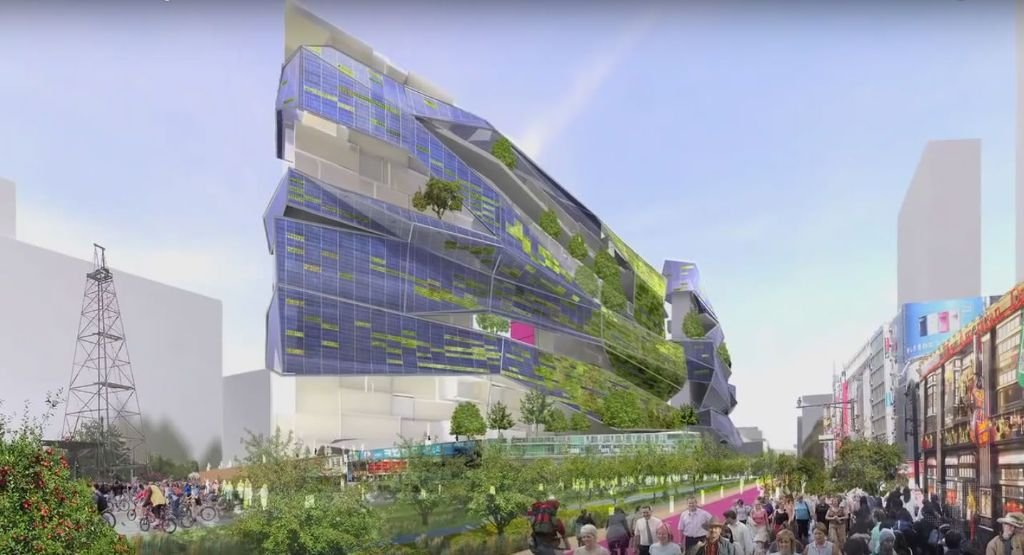
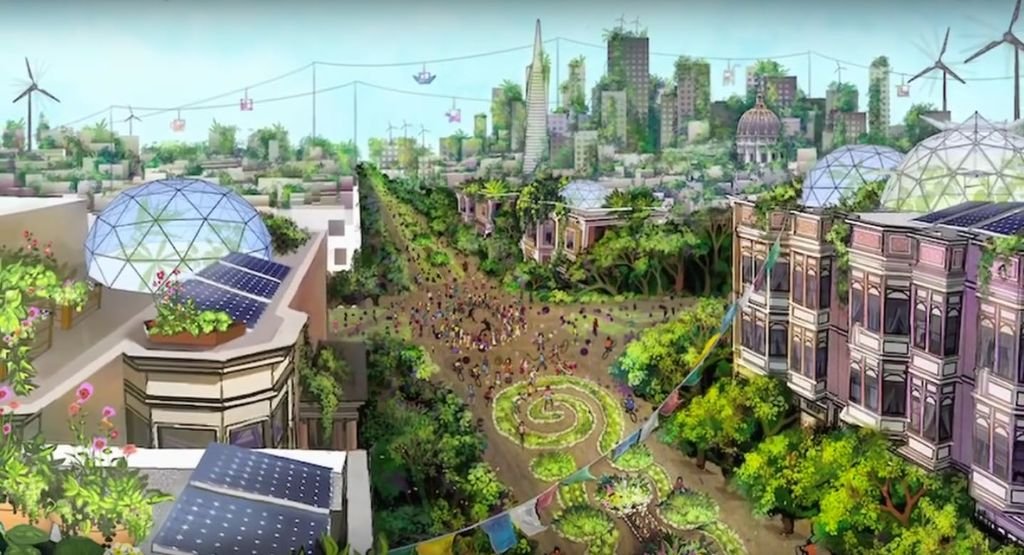
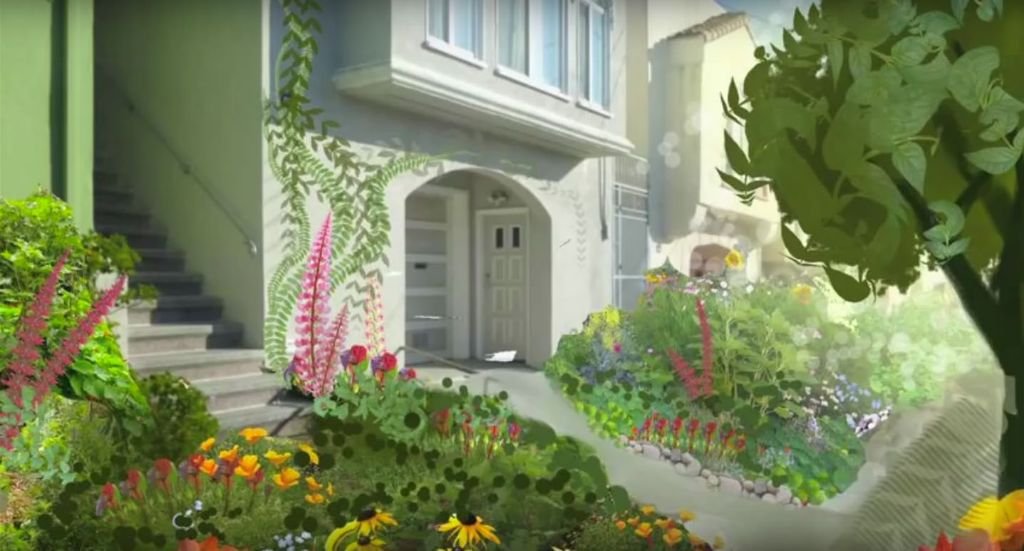
Image: Evolutionary life architecture (2016)

Natural sunlight has an effect on the human body.
Solar radiation is the genesis of life. Without light, there would be no life.
“The quantity of light, the quality of light, the distribution of light and the variation of light between day and night (…) are related to the genesis of man, we are better understanding some of these links” (Kuller, 1981)
Natural light produces direct consequences on health through the brain and endocrine organs. These effects are important in the design of interior environments, which optimize the state of wellbeing in people.
This understanding is of great importance for interior designers, as they recognize that natural light does not only affect the growth of plants, and the conditions of the quality of lighting in interior spaces must be considered.
The sources of natural light are the moon and the sun,
which control all life processes, oxygen, water, plants,
food, animals, and humans.
Many aspects of people’s physical and mental wellbeing are regulated by natural light rhythms.
This light is changing, in color and intensity, during
the 24 hours of the earth’s rotation.
In interior design, it’s important to consider the effects
of natural light within each space and how it changes
during the day at different times and seasons of the
year.
The windows and landscaping can contribute to the
way in which light manifests itself in the space. When
experiencing the spaces, you could decide how to
incorporate artificial lighting.
Natural light, in addition to facilitating visibility, has components of solar radiation, in the infrared and ultraviolet regions, which affect the body, enters through the skin and through sight. Some effects are as follows:
Ultra Violet Radiation
Visible Light Radiation
Infrared radiation
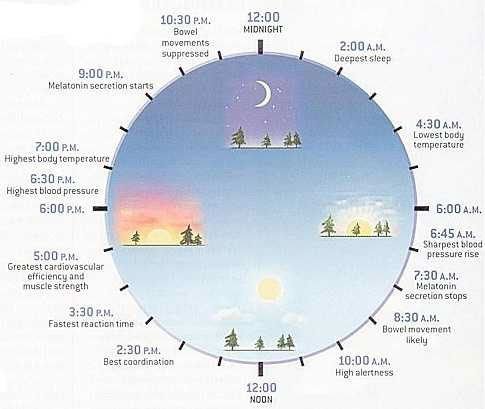
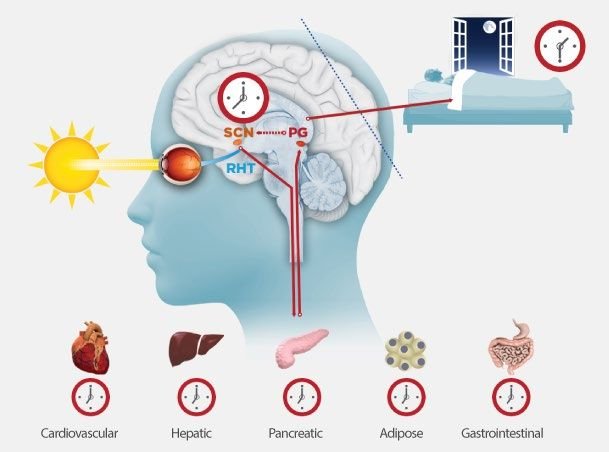
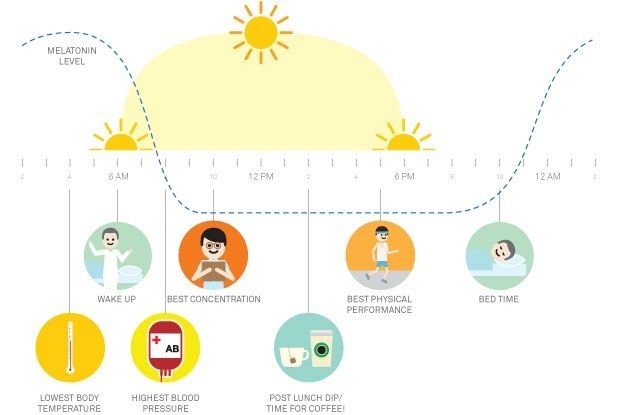
Image: Fuzzy Science)
Artificial lighting is a necessity for environments in which activities are carried out at night. It must be implemented strategically to create appropriate environments.
Artificial light allows the designer to create
different environments for practical uses, as well as
highlight decorative elements.
Each type of light source emits color and can be
used in different ways, to create different effects and
thus propose different atmospheres.
It is important then, to have knowledge about the
type of lighting emitted by the different lamps, since
they can be used to enhance elements, focus a space,
and even form patterns by positioning in order to
achieve some effect.
In spaces, it is necessary to consider direct and indirect lighting, in addition to their positioning, as it can define their distribution.
The artificial lighting to be used is defined, as its function in the space and the desired balance are analyzed; based on this, the type, layout, quantity and quality to be used are proposed. On the other hand, it is important to consider the use of luminaires, which reduce energy use, to opt for sustainability.
Likewise, there are appropriate lighting levels for each habitable and non-habitable space, measurable in luxes.

Color is experienced by human beings consciously, subconsciously and unconsciously The reaction to color is psychological and is integral to behavior, as it affects people’s mental and emotional processes.
Color is the brain’s interpretation of certain wavelengths in the light spectrum. When white light passes through a prism, the eye perceives different light waves and interprets them as colors.
For physicists, color is the wavelength of light that an object generates or reflects. For psychologists, color is an internal process that may or may not be related to a physical event.
The stimulus of color, which is perceived from the environment, is connected to the internal world of the human being, and can be projected in his imagination.
An example of this may be to think of the color green; it is unlikely to be related to the pigment chlorophyll, which in its molecular structure absorbs all light waves, except for green ones, which it reflects. It is more likely that when you think of the color green, it is related to a trip where there was a wide field, of that color. Therefore, the impression of color “is a sensation that simultaneously activates our thoughts and cognitive mechanisms.” (Mahnke, 1996, pp 7)
Color perception is related to experience, as it indicates being conscious.
In addition, it is possible to relate the biological factors that cause this stimulus as well as the unconscious collective, the symbolism that is given to color by associations, and the cultural experiences of color. Fashion and styles determine certain personal preferences of liking or disliking a certain color.
Therefore, for designers it is important to know the symbolism of color, to use it in the right context, because color, being light, is a form of energy and affects the functioning of the body of those who are exposed to it, while influencing their mind and emotions.
“Color affects the cortical activation of the brain, as well as the functions of the autonomic nervous system (…) which regulates the internal environment and hormonal activity. Color elicits aesthetic and emotional associations. (Manhnke, 1996 pp18)
The built environment affects the psyche beyond aesthetic impressions. Space is not necessarily functional for the simple fact that it complies with a certain aesthetic line, interpretations of what is beautiful can be varied and elusive depending on the context. personal experience and preferences.
The user interprets the spaces according to his experience, therefore, the designer must give importance to comfort, ease of use, and the appropriate conditions to each space, beyond a pleasing aesthetic line, to meet its needs.
In the design, the emotional reactions provoked by the built elements must be considered and that these do not cause negative effects since “psychosomatic medicine concludes that the mind is responsible for many ailments” (Manhke, 1996, p. 48)
Interior designers exert a great influence on the stimulus and perception of people in relation to space; For this reason, they must promote environments that produce inviting, personal, and welcoming sensations. In this way, they will be contributing to reducing stress and anxiety.
Some conditions that can be aggravated by psychological factors are:
There is research according to which “a positive mood in people strengthens the immune system against ailments, while a negative mental state weakens it.” (Manhke, 1996, p. 49)
According to David Felten, professor of neurobiology and anatomy at the University of Rochester School of Medicine, the interaction of mind and bodily functions appears the moment sensory stimulation begins to be perceived.
80% of the information in the environment is perceived. This information is conceived, interpreted, and communicated in natural and built environments. It is obtained from perceptions of visual, associative, synaesthetic, symbolic, emotional and physiological effects on the human being. (Manhnke, 1996 p18)
Based on the results of several investigations, psychologist Robert Plutchik identified patterns of behavior associated with emotions and their internal processes. They are then analyzed in conjunction with their opposites and levels of intensity. (Manhke, 1996, p. 49)
In this way, Plutchick develops a color wheel based on two main emotions, to obtain a third emotion, for example, acceptance and joy = love

Image: Sovereignly, 2016
The following graph describes the dyads of emotions:

Image: Synergy with the Universe
The set of all the elements in internal spaces such as color, lighting, patterns, textures, furniture and accessories produce an effect by communicating an impression. That impression leads to an emotional reaction.
The perceptions and sensations of people, in different spaces, lead to consider the necessary requirements to create an ideal environment, projected based on the functioning and expectation of a certain internal space. Environmental conditions must be identified to analyze the reactions they entail.
The designer’s challenge is to avoid negative emotional reactions.

Image: Estefanía Maldonado, 2015
Due to the stimuli that the natural environment exerts on human beings, it has been proven that incorporating biophilic designs in internal spaces, in addition to harmonizing spaces, generate positive emotions in users.
Biophilic design incorporates natural elements into built environments, to evoke nature and give people a
sense of well-being.
Nature contributes to the development of the physical and intellectual abilities of the human being. Biophiliacs
recommend incorporating natural elements in internal spaces, to make users feel in harmony with nature, this
will require incorporating more light and natural ventilation in the spaces.
Biophilia is closely related to sustainable practices, because in addition to its positive effects on the mental and
physical health of users, it contributes to the saving of resources. Based on this concept, bioclimatic designs
are made for built environments and environmentally conscious strategies are proposed to take advantage of
available natural resources.
Healing environments are then proposed, by incorporating biophilic design, as studies prove that its benefits
include emotional well-being, stress reduction, and healing.
(Katherine S Cheas, Keira and Susaña, 2014).
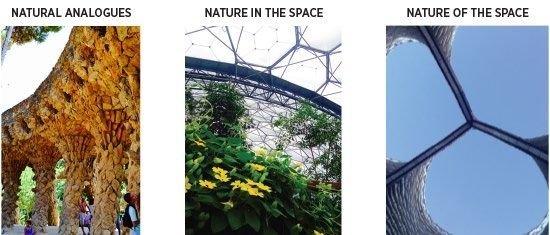
So that users can achieve emotional improvement during their stay in the program.
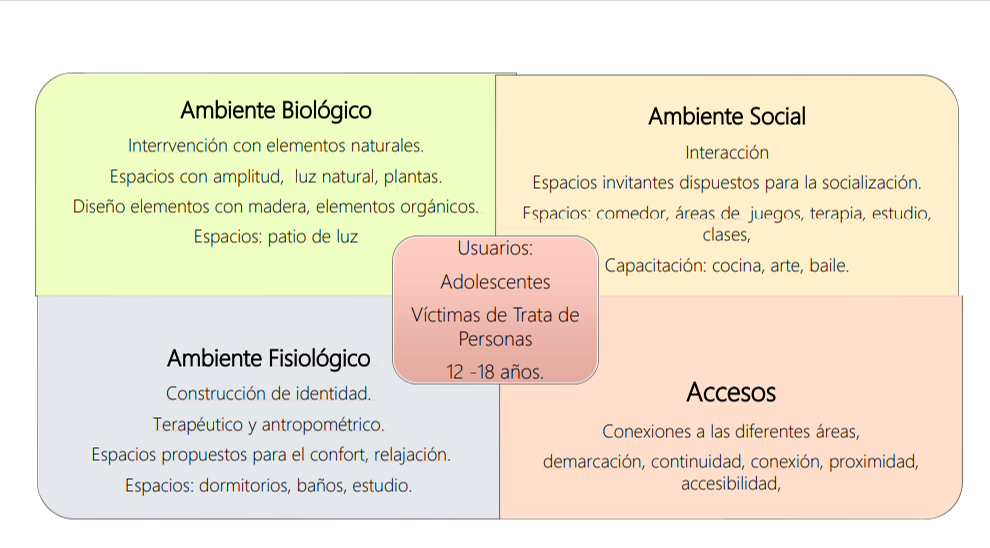
The structure and models of care serve as a guide, in the identification of necessary spaces, to carry out
the processes and activities that will facilitate the restoration. Area needed for physiological needs and
identity building:
It was all happening with desinterested efforts of Volunteers, Donors and Govt Support…
© 2025 | Karina Monge Designs. All Rights Reserved.
Designed with 🤍 by Priyash Kadu