

In accordance with the principles of survival and development:
The child is considered an integral human being, with simultaneous and successive requirements in all areas of development, which must be assumed (by the responsible adults and the guarantor bodies), in a way adjusted to each stage, to guarantee the optimal development of his or her potential, taking into account the age and maturity of the child. to determine their selfdetermination and freedom.
“The person is assumed as a being in constant and permanent development, who seeks their fulfillment, awareness and internal freedom, which allows them to be autonomous, integrate the affective and the rational, as well as be creative and active in front of their environment.
“Therefore, the importance of socio-affective development is recognized, and therefore, of motivation, attitudes and values that each person adopts, to give meaning to their lives; and consequently, respect for every human being is assumed as a principle, rejecting discrimination based on any particular condition of the same.”
The need for the realization of autonomy develops in an environment where the individual feels safe.
Confident in expressing their thoughts, emotions, and feelings, without being belittled, humiliated, or negatively criticized.
Therefore, beyond the need for a safe environment, these people require other safe ones. These will provide constant affirmation thus encouraging the free expression of the individual. It is important to emphasize that the individual is in the process of rebuilding his self-esteem while developing socially and affectively. It is important to motivate the individual to be creative and active in their environment. The sense of security will allow free expression according to their personality. The recognition and expression of emotions will help in the construction of selfesteem, since in the environment where they developed, they had to suppress emotions, feelings and opinions.
The restoration process is a way back to life. In a community context, the person is reconstructed in his or her identity and liberated in his or her destiny.
The approach must be holistic in caring for victims of human trafficking, while cooperating in the fullness of healing.
Adolescent women victims of human trafficking -National, foreign. (Diversity of family, customs, culture.)
The guidelines for the development of care models for the care programmes for minors of the National Children’s Trust are taken as a reference. This document discusses the requirementsfor a shelter as well as describes the situation of children and their needs.
According to individual rights and interpersonal relationships, all personal conditions must be taken into account, as well as circumstances surrounding them.
These must be understood through the integral requirements of each stage of development.
The best interests of each child and their integral protection must be the driving force in each case. (PANI, 2013)
“The guarantee of rights for children and adolescents must be considered as a priority for collective groups that are in a condition of vulnerability.
Those who are in sexual exploitation, labor exploitation, abuse, negligence, inequality in access to means and opportunities for development and participation.
Indigenous children, Afro-descendant children, children with disabilities, migrant children and children living in rural areas. PANI , 2013
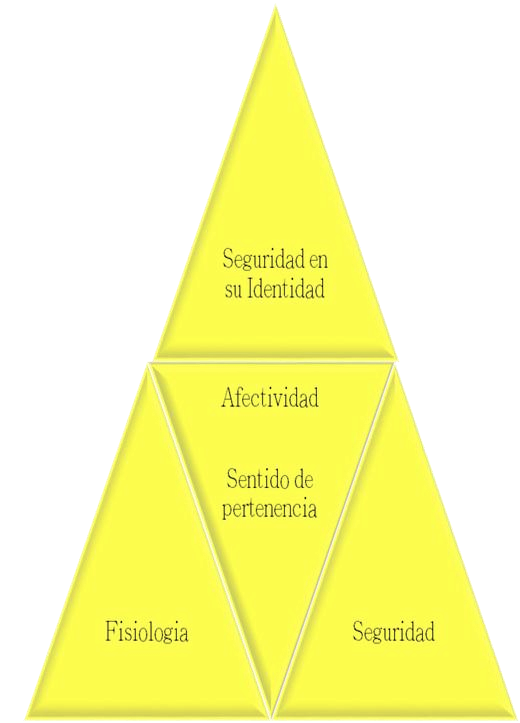
Graphic: developed by the author, 2015.
Based on the Shine seminar April, 2014
Space Considerations for a Hostel
The reason for the creation of a temporary shelter for victims of trafficking in persons is primarily the restoration
of users; The characteristics of their needs and their reality as trauma survivors are considered. The challenge for a designer is to intervene in the built environment with the needs of the users in mind.
|
IDENTITY
|
SAFETY
|
AFFECTIVITY
|
PHYSIOLOGICAL
|
|---|---|---|---|
|
Attention without requiring anything in return. It provides a new sense of self. Knowing that you are loved, accepted simply by being yourself. Healthy attachment to family, the person can develop safely without fear of manipulation or exploitation. Affirmation, dreams and desires.
|
Defined and expressed for each person Will, as a value Limits. Affectivity (disinterested). Be heard (I see you, I hear you, I value you)
|
Self -reflection (no trauma factors, or need to be defensive) Ability to be affective. Increase tolerance and capacity for joy. Provide time and Patience to examine the ties Recognition of individuality. Value internal experience and range of emotions. Recognition of individuality Provide safe shelter and reliable figures Relate through humor, shared experiences, authenticity, collaboration on projects, consistency, familiarity. Experience of experiencing affectivity in a safe space
|
Physical security.
Breathing,
sleeping, feeding,
hostel
dress
hygiene
health care
Exercise
transport.
|
Below is a graph on the stimuli of emotions, based on the description made by psychologist Roberth Plutchik, which was explained in chapter 2, guidelines that are considered in the design proposal.
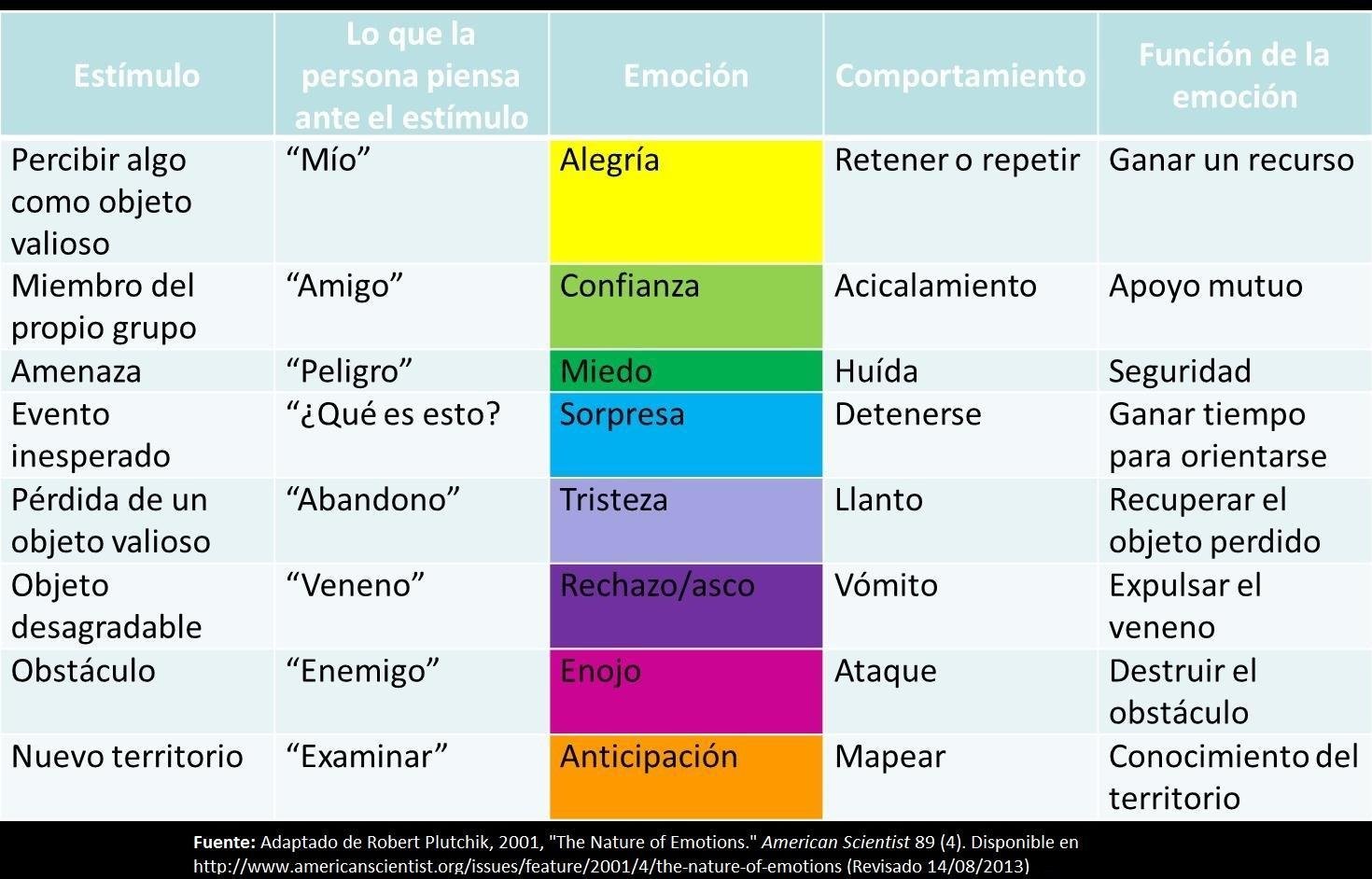
Table: juconicomparte, 2016
Adolescence is a phase of personality development, which will impact the conformation of the adult and his or her performance in society. The approach to this adolescent stage is very disciplinary: Education, Psychology-Neurology, Genetics.
Due to the changes that occur at this stage, a certain crisis is expected in any adolescent, which can be altered and influenced by external factors such as education and society and the way in which they respond to their needs (sex education, activities and leisure, training). The brain does not reach maturity until the age of 25, so they are usually impulsive, disorganized, and show a lack of planning
|
PHASES
|
PHYSICAL
|
EMOTIONAL
|
INTELLECTUAL
|
SOCIAL
|
|---|---|---|---|---|
|
10-12: pre-adolescence.
13-14: 1st phase. 15-16: 2nd phase. 17-18: 3rd phase. |
Sexual maturation and body growth.
|
Phenomenon of disengagement, greater importance of friends, greater moral and behavioral autonomy. (Erickson)
|
Thought logical-formal.(Piaget)
|
Legal and civic responsibility.
|
|
Characteristics
|
|
|
|
|
|
Effects
|
|
|
This can clash with the adult, who sees reality as the only possible one
|
|
Adolescence will depend on the structuring of the personality, education, relationships, etc., forged in previous stages.
Importance of having a group of friends, games or sports structured, not marginal. Importance of school performance, since school failure is a risk factor.
To guide the work towards where the aptitudes and capacities of the adolescent are pointed. Importance of education on topics such as the consumption of toxic substances or sexuality. Educating values and goals, emotional intelligence, knowledge, planning and self-control skills, etc. Creation of social resources, leisure, etc., to give more adaptive outlets to adolescents.

Face of Justice functions as a missionary organization made up of volunteers.
The staff is made up of missionaries who are in charge of finding sponsors to cover their personal expenses. These people make a commitment to work without pay, to fulfill the mission of Face of Justice.
Abolitionism is a doctrine that advocates the annulment of laws, precepts or customs that are considered to be contrary to ethical and moral principles. The term was mainly applied to the current that advocated the abolition of slavery.
Young Abolitionists
Age: 18+
Face of Justice provides the opportunity for international students with an interest in cross-cultural urban training. Some are referred by the Veritas University, the University of the Nations and other educational centers to do an internship. Internships are offered for periods of one month to one year.
Church teams also visit the mission center for a few days, weeks, and even months and collaborate with various or specific projects in the areas of prevention and intervention.
Local part-time volunteers serve every week with street visits, translation, and different areas of the organization.
Trauma: When the Unthinkable Happens
-Elisabeth Hamso, 2014

Immersed in the tragic stories of the victims, the professionals who care for them are exposed to secondary trauma.
Many times victims, not understanding what has happened to them, are not aware of the impact of the
aggression. People who hear their stories, and the severity of the consequences of such abuse and assault,
experience the effects of their stories through secondary trauma.
Caregivers suffer from compassion fatigue, which is the cost of caring for those facing emotional trauma.
Secondary trauma occurs when a traumatized person is being helped. It is an indirect trauma that arises from
hearing the stories of those who experienced great suffering. Hamso, 2014
Trauma: Any experience that involves a serious threat of harm to oneself or others with overwhelming negative
emotions such as distress, helplessness, grief, or fear.
There is a “theoretical body on the effects of stress on caregivers, volunteers and professionals, (Stamm, 1999)
where vicarious traumatization, or secondary trauma caused by a loss of empathy in the face of the effects of
highly traumatizing situations, is identified. This wear and tear can result in a difficult continuation of the
development of their work. (Bernardo Moreno-Jiménez, María Eugenia Morante, Eva Garrosa, Raquel
Rodríguez. 1999).
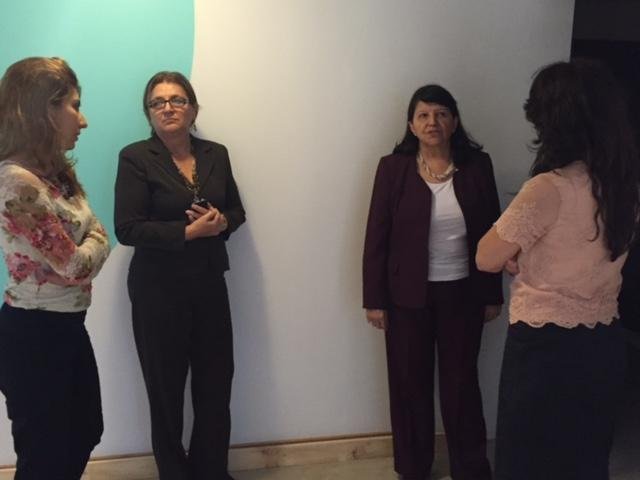
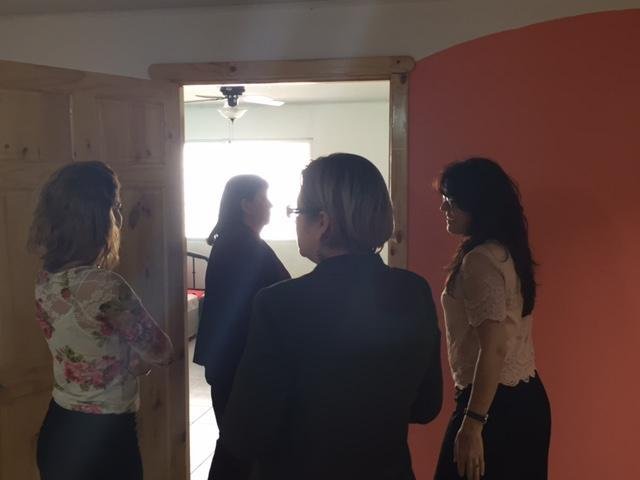
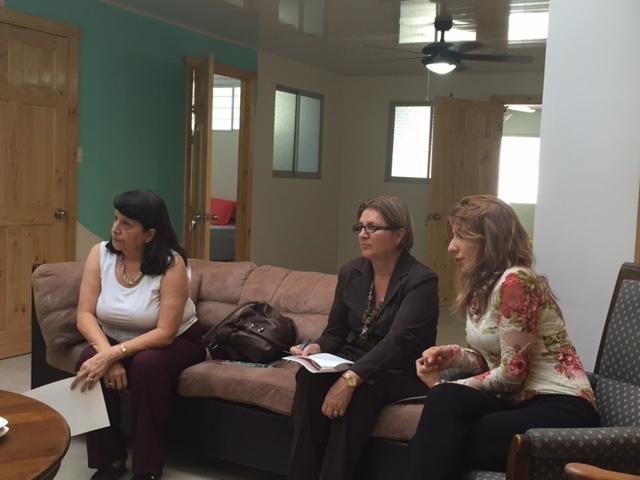

Photographs: Face of Justice Association, 2016
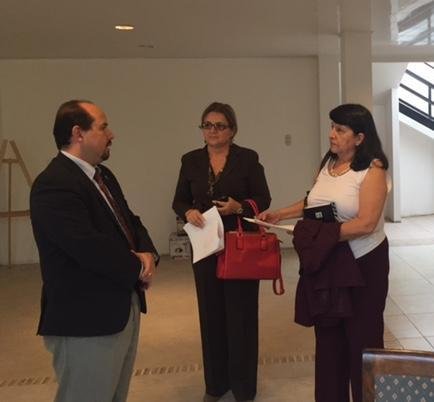
In the process of Requirements and approvals of the Shelter, it was important to meet with government entities to inform them about the project and how Asociación Rostro de la Justicia can collaborate to face this problem.

Diego Castillo 24.02.2016
Head of the OIJ Human Trafficking and Smuggling Unit
The Heads of the Judicial Investigation Agency received us to present
the proposal of the shelter as a resource in their work identifying and
assisting victims of human trafficking.
They informed us about the reality in Costa Rica and the people who
attend, also how the greatest need is a place to stay for these people because they suffer from constant threats due to their vulnerability.

EUGENIA SALAZAR. Prosecutor of the Specialized Prosecutor’s Office for
Sexual Crimes and Domestic Violence. 15.02.2016 against Gender Violence. Doña Eugenia, informs us about the viability of the project as well as how to proceed with the work in conjunction with the Attorney General’s Office. conclusions about this meeting, It is extremely important to understand the legal processes in which adolescent victims of trafficking are going to be facing since it can become a revictimizing process, it is important to have a pleasant and safe space to process what happened.
Meeting with Johnny Leiva, PUSC Deputy
Meeting and interview with the President of PANI Mrs. Teresa León, regarding Casa Libertad Feb. 17. 2016
What is the biggest challenge of PANI with the situation of children at risk in Costa Rica?
The most difficult thing is that the children want to go with us. They do not trust because we must act with legal processes. The most difficult thing is that the children want to stay in the shelters, and receive help.
About shelters, what is required for their operation?
That all requirements are met and go through the accreditation process The Care Model All approvals from the Ministry of Health
Where and from whom is the PANI support required?
PANI works together with government entities, PANI takes care of everything that concerns children in Costa Rica. At the moment, the United States is criticizing us and accusing us of many things, but the truth is that they are not giving us any kind of help. We are trying to get them to help us with technology. I’m about to write a letter to the embassy.
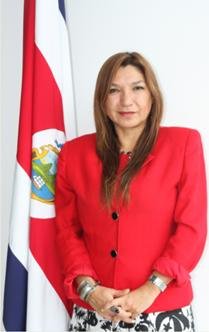
With respect to street girls (victims of trafficking), what is the challenge?
ALEJANDRA MORA, Executive President of INAMU and Minister for the Status of Women. 24.02.2016
Regarding the problem of trafficking, Mrs. Alejandra informs us that some identified victims are referred to INAMU by immigration for entry into INAMU’s domestic violence shelters. She affirms that there is a great need for a shelter for minors, She discusses the problem of prostitution, she does not consider it work because the women who dedicate themselves to this have a background of aggression. And it is a practice that denigrates the person. The technical secretary told us about the risks to their physical and emotional integrity to which these people are exposed.
© 2025 | Karina Monge Designs. All Rights Reserved.
Designed with 🤍 by Priyash Kadu