
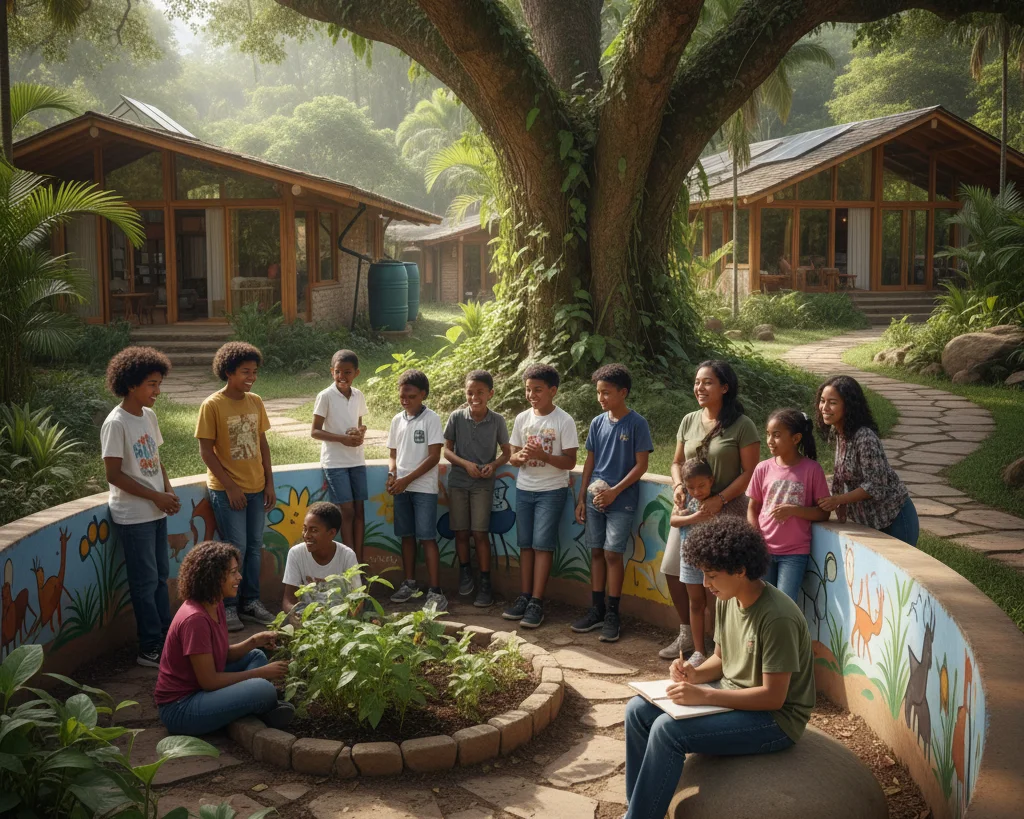
PANI has 41 shelters, in which 395 children and adolescents are separated from their families due to
a situation of vulnerability and risk.
Shelters – ASCRIGERE Restoration Homes
Enabled since 1996, these shelters assist children and adolescents who are at high social risk in a street situation and choose to change their lives.
With a two-year program, they focus on adolescent restoration and opportunities for a better quality of life.
The program gives dignity to adolescents and incorporates spiritual, restorative, emotional, intellectual, physical, social, and family aspects.
Among the vocational projects they have an emphasis on the environment and care for nature through alternative forms of production.
Located in the province of Limón, the rural environment favors these projects, as well as the community.
The program includes adolescents of different nationalities and cultures; once the adolescent finishes the program, they are given the opportunity to continue with the ASCRIGERE program of trainers, family reintegration or start a life project with the support of the organization

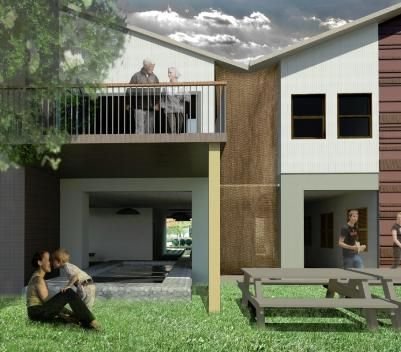
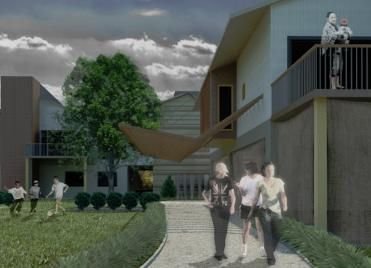
Images: Harbourage 2016
Transitional Living Center, Harbourage
Provides short-term emergency shelter for rescued female or male victims of human trafficking in Florida, USA. Survivors are provided with shelter and therapy to begin the restoration process.
Below is a long-term shelter:
The design will correspond to the following
Therapeutic Design
Psychologically, each space is designed so that a daily routine can be fulfilled that allows each resident a consistency of a daily schedule, where they can make the best use of their time. Housing units promote productive lifestyles.
Ecological, sustainable design
Sustainable design should take into account sun, shade, wind, water, and climate control. In consideration of these, an environmentally friendly environment can be created, with sustainable practices and an organic therapeutic system. They incorporated simple, natural ideas that lead to a pure lifestyle, to provide a therapeutic and healthy environment. Its design plan includes: use of natural water sources, rainwater retention, compost septic system, use of fiber cement.
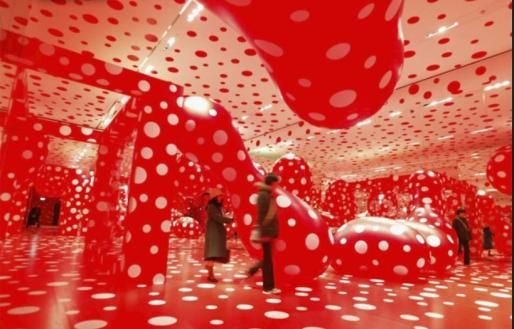
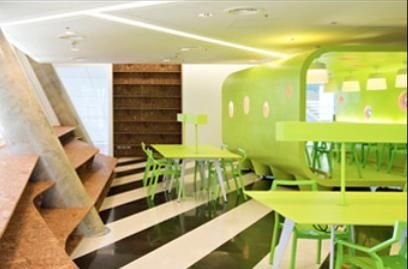
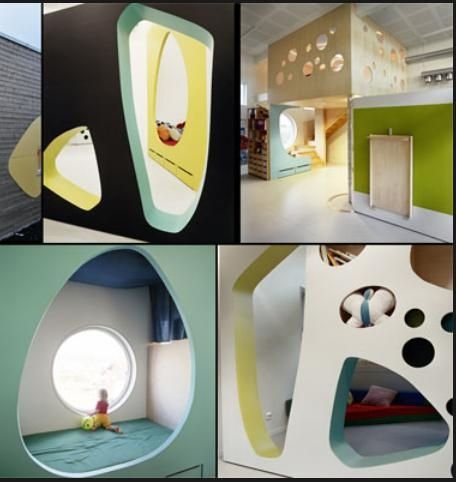
Images: The Cool Hunter 2016
Victims of human trafficking did not have recreational spaces, because from a very young age they have been victims of exploitation, whether labor or sexual.
For this reason, their emotional development is impeded in a traumatic situation. An important consideration in the design of hostels is to incorporate playful spaces, where they can express and develop their creativity, as a space of expression where feelings of frustration and rebellion can be suppressed.
Article, The Cool Hunter “The children have unlimited imagination, they will find some way to play. They will play with stones, branches, water, grass, and even with themselves, they will look for a way to turn any object into a creation that will have life!
With color, imagination, work, and resources, spaces for young
people in communities can be better used to encourage their
creativity.
From the construction of self-esteem, discovery of their skills, talents and knowledge, in the best of circumstances they can
become collaborators in their communities. It is a reason to ensure that environments are rich in creativity, art and inspiration, so children should be given all the necessary support and resources.
Anyone with creative ideas, energy, collaborators, and money can
give children design in their communities. “A lot could be achieved if individuals, companies, and cities paid more attention to play environments.
(Tujia Seipell, 1/5/10 The Cool Hunter)
Valencia, Spain
Limited budget for a language school for international students 20-30 years old.
The space is divided into three classrooms, the staff area and a lounge.
The colours and components of each space come out of the school’s logo, and the three brand colours, blue, yellow and pink, represent the three levels established by reference of the Common European Framework of Reference for Languages.
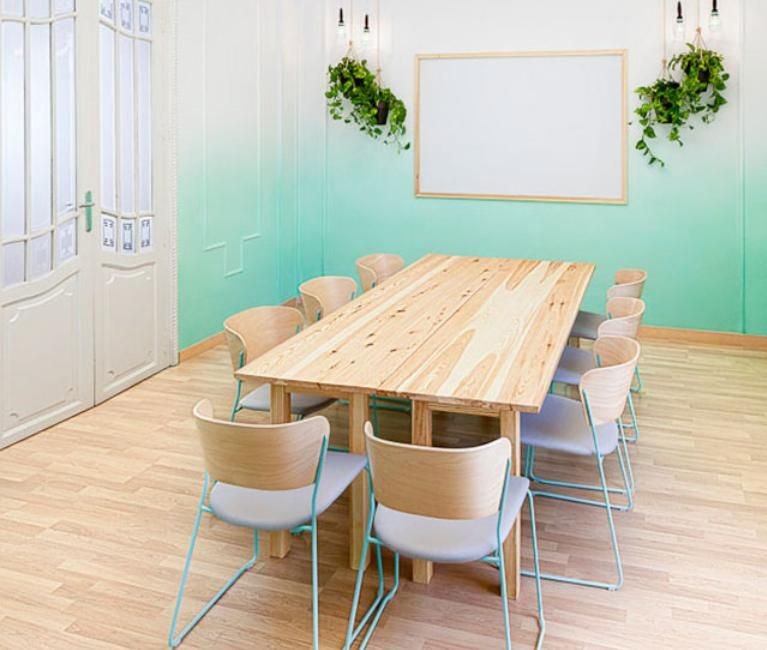
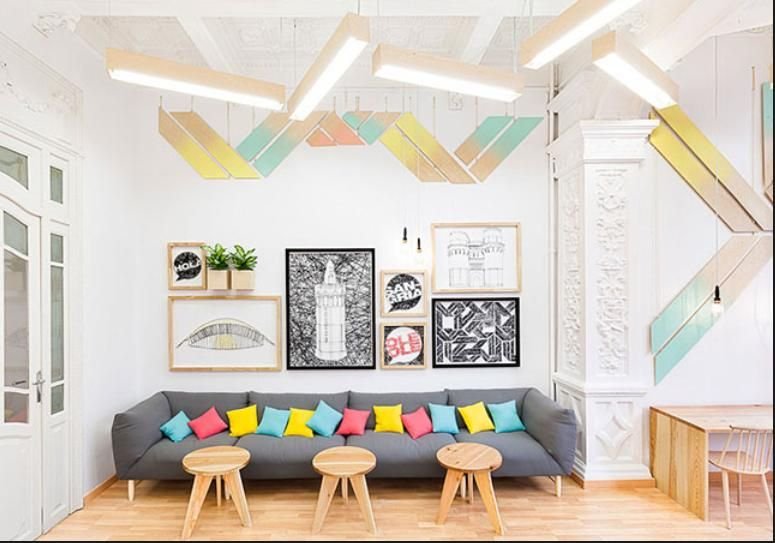
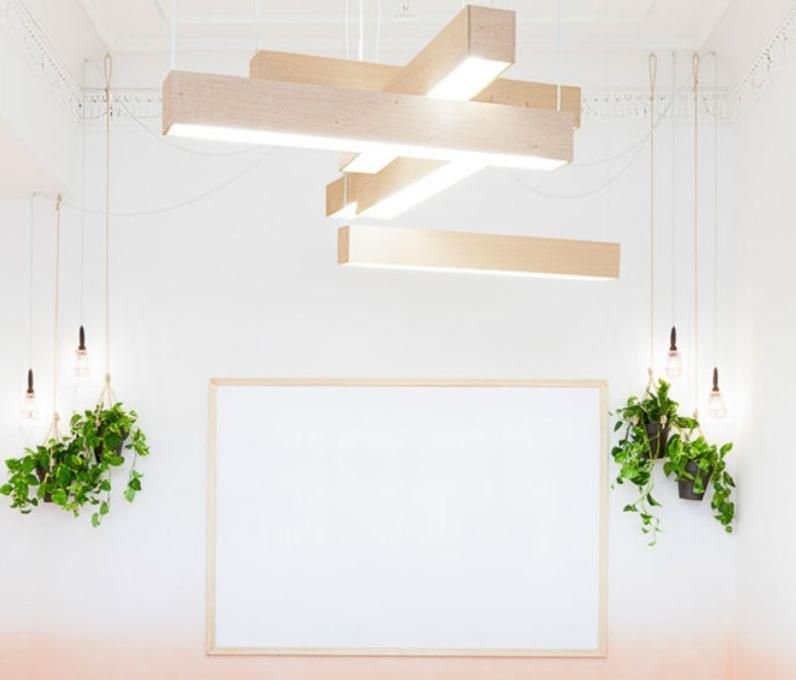
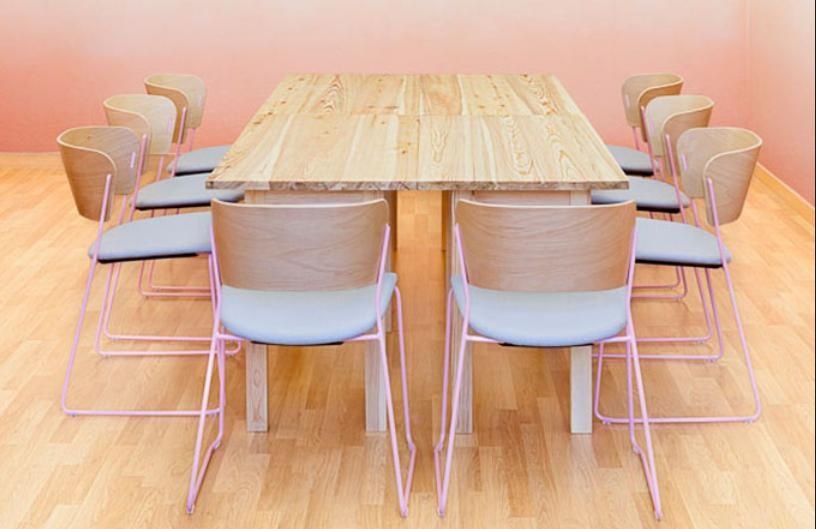
Images: The Cool Hunter 2016
The first two case studies correspond to shelters for children and adolescents located in Costa Rica, there is a
great concern to provide green areas, either for recreation or for the benefit of sustainable alternatives. The
importance of incorporating nature is highlighted, to provide a sense of well-being to the human being;
however, no design approach is found in the development of these shelters, therefore, we proceed to analyze
the case of Harbourage, which is a long-term shelter project, where the needs of the users and the intervention
they require are raised. This project serves as a reference, since for the planning of the spaces, it takes into
account the daily routine of the users and community life, as well as the concern that it is built with
environmental awareness and responds to a sustainable design.
For elements of internal design itself, case studies 4 and 5 are considered, corresponding to an article on playful
spaces and a language school. These two cases are included, because through design, it is projected to stimulate the senses of users through the use of color, textures, furniture and geometry.
The aforementioned elements will be taken into account for the design proposal and how to implement them
will be analyzed, with the conditions and limitations of the Casa Libertad shelter and the Rostro de la Justicia
missionary center.
Ballestero, 2015
The commitment signed by Costa Rica at the First World Congress against Commercial Sexual Exploitation in Stockholm (1996) was the creation of CONACOES (National Commission Against Sexual Exploitation). The institutions that deal with human trafficking make up the commission in CONACOES. The mission of CONACOES is to carry out permanent work at the intersectoral, inter-institutional and interdisciplinary levels, to comprehensively address the commercial sexual exploitation of children and adolescents in the country. Under the leadership of PANI, public and private, national and foreign institutions join forces to provide attention, prevention and eradication of the commercial sexual exploitation of children and adolescents in Costa Rica.
|
Ministries
|
Government Institutions
|
Observers
|
NGOs / Foundations / Associations
|
OTHER
|
|---|---|---|---|---|
|
|
|
|
|


Face of Justice, legal ID: 3-002-678438,
It is a non-governmental organization that confronts human trafficking and commercial sexual exploitation of
men, women and children in Costa Rica. Rostro de la Justicia responds to the situation of vulnerability through
different prevention, intervention and restoration projects.
The entity’s main lines of action are:
Advocacy:
Survivors of human trafficking, sexual exploitation and those still in prostitution are accompanied in legal
processes from denunciation, protection, and very soon the need for restoration will be answered. It is linked to
various government agencies and other non-governmental organizations, which care about the needs of these
men, women and children, and training trainings are held every month for community leaders on human
trafficking and commercial sexual exploitation, teaching them how to identify potential victims and offering them options for reporting possible cases.
Visits in the streets: It is considered essential to establish interaction with men, women and minors who are
involved in prostitution in the center of San José. The team serves coffee and cookies in the evening, twice a
week on the streets of San Jose.

Shelter:
To address the greatest need in Costa Rica, Rostro de la Justicia is about to open an immediate care center
for victims of human trafficking and commercial sexual exploitation, which will be called La Casa de Libertad.
The intent is to meet the spiritual, emotional, and physical needs of trafficked underage women in a home-like environment where they can heal, find their fulfillment, and reach their highest potential.
Volunteering:
Face of Justice provides the opportunity for students with an interest in cross-cultural urban training, in the
effort to combat human trafficking and commercial sexual exploitation. It offers periods of one month to one
year of volunteering, which includes lodging, cooking facilities, and transportation to all ministry activities.
The work began with night visits, where coffee and cookies are offered to people who are on the streets
prostituting themselves. As a result of these visits, elements of commercial sexual exploitation and human
trafficking were evidenced.
By listening to the stories of these people, situations of vulnerability were identified. This is how a missionary
family from the United States, a team of volunteers and a Board of Directors made up of merchants, lawyers
and ministers, met to respond to this problem and provide a solution. From this concern, the Face of Justice
Ministry emerged, which is also supervised by several Executive Directors of similar organizations in the United States and other organizations interested in supporting and raising funds for the different projects.
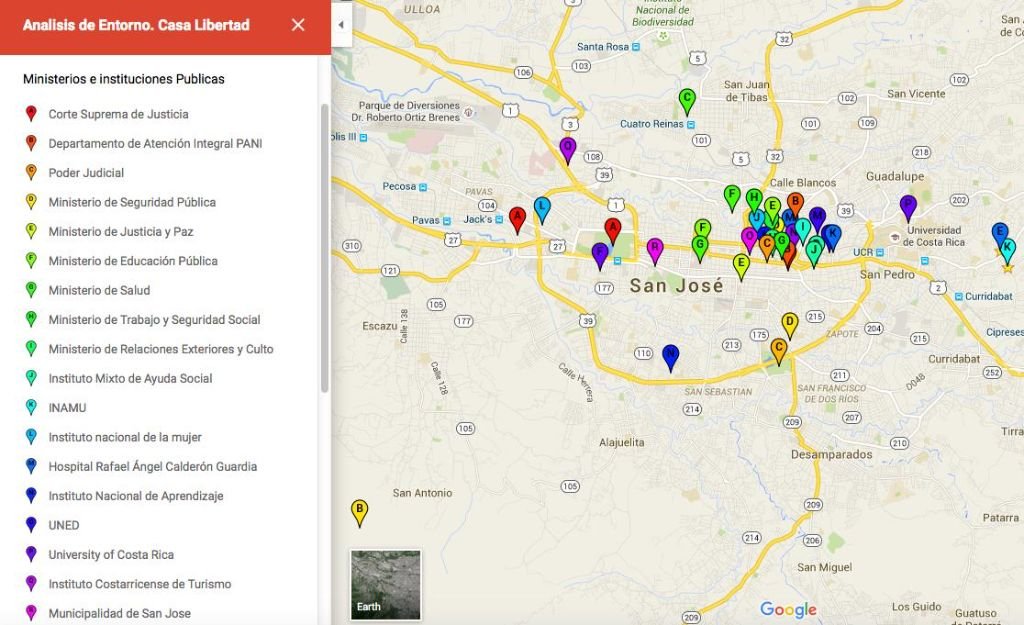
The facilities are located in San José, it is confidential; since victims of organized crime will be attended. These
facilities are located close to the different government entities that support and follow up on victims in each
relevant case.
The strengths of the project range from the real impact that is taking place on society, to the extent that there is an evident change in the lives of vulnerable people, who do not find a way out of the sad reality of prostitution, because they are subjected to a cycle of excessive exploitation, with few expectations in terms of a full and useful life for society. in addition to the impact for the country, as it is the first shelter for victims of human trafficking.
Opportunities: Opportunities are considered in relation to the fact that this project is innovative. Since the country does not yet have specialized shelters of this type, it will provide the opportunity to demonstrate to international governments that Costa Rica is committed to the well-being of its vulnerable and high-risk population. From a humanitarian approach, this project responds and proposes a solution to a problem that has been tolerated and accepted as a social pathology. This project offers hope to victims and another perspective to those who must respond to this social inequality.
Weaknesses: the weaknesses consisted of bureaucracy, since long procedures had to be carried out to obtain the operating permit, as well as the lack of support and resources allocated to the development of the project. It was limited in the sense that it did not have the economic resources to hire qualified personnel for the many processes and details involved in the development of a project of this magnitude.
Threats: The greatest threat in the development of the project was the time factor, since it must cover a topic that is little recognized in the governmental sphere, which is also delicate due to its social effect on the community and in the shortest possible time, due to the expectations of the sponsors who provide the economic resources of the entire project. At different stages, the project was threatened in that if the established dates were not met, the costs increased, as well as the credibility of the organization in the face of the willingness of the donors.
The threat was only diminished by the fact that the director handles communication excellently and managed to establish very good relationships with all those involved in the process, which resulted in a decrease in stress and a very good attitude for all those who joined forces in the project.
© 2025 | Karina Monge Designs. All Rights Reserved.
Designed with 🤍 by Priyash Kadu